
Bond ladders in 2026: how to build a payout schedule and reduce interest-rate risk
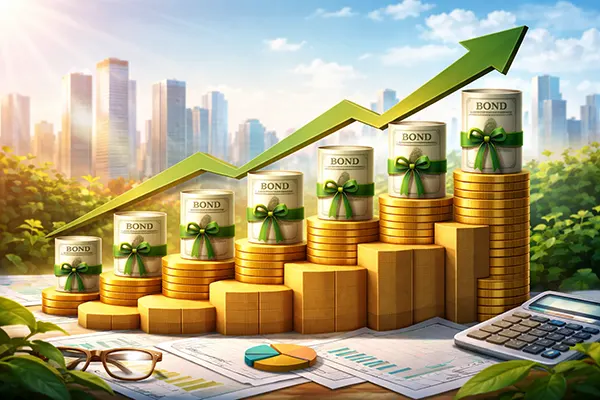
When inflation is no longer “headline scary” but cash rates are still meaningfully positive, 2026 is a very practical year to stop guessing where rates go next and start designing around uncertainty. A bond ladder does exactly that: instead of buying one big bond and hoping you’ve timed the market, you spread maturities across several dates so that money returns to you in predictable chunks. Those maturities become your payout schedule, and each time a rung matures you can reinvest at whatever yields exist then.
Choose ladder maturities that match real goals (not just a neat 1–2–3–5 pattern)
A good ladder starts with the cashflow problem you’re solving. “I want steady income” is vague; “I need £6,000 in 12 months for a tax bill, £8,000 in 24 months for a car, and I want the rest rolling for the next five years” is actionable. In ladder terms, that becomes rungs that mature close to those dates, plus one or two longer rungs that keep overall yield competitive.
The classic spacing (1–2–3–5 years) is a decent default, but it’s not sacred. If your horizon is short and you genuinely need the money, keep the ladder short (for example, 6 months, 12 months, 18 months, 24 months). If you’re building retirement “top-up” income, you can extend rungs further (say, 2, 4, 6, 8, 10 years) but still keep the maturing rhythm so you’re not locked into a single rate environment.
One practical build method is “rung sizing by priority”. Put larger amounts into rungs that fund non-negotiable dates, and smaller amounts into the longer rungs that are there mainly to improve expected return. For example, on a £20,000 ladder you might allocate £5,000 to 12 months, £5,000 to 24 months, £4,000 to 36 months, £3,000 to 48 months, and £3,000 to 60 months—because the first two years’ cash needs are known, while the later years are flexible.
How to avoid common ladder mistakes in 2026 (call risk, liquidity gaps, and “false diversification”)
First, be careful with callable bonds. A ladder is supposed to give you control over when principal comes back. If a bond can be called early, your neat schedule can collapse right when reinvestment opportunities are worst (typically when yields have fallen). In plain terms: call features can turn a predictable ladder into a surprise balloon payment.
Second, treat liquidity as a design constraint, not an afterthought. Even if you plan to hold to maturity, life happens. A ladder built entirely from individual corporate bonds with wide bid–ask spreads can be expensive to unwind. Many investors in 2026 solve this by mixing instruments: high-quality individual bonds where spreads are reasonable, and short-maturity bond funds or money-market funds for the “buffer” rung that covers emergencies.
Third, don’t confuse “lots of bonds” with diversification. Ten bonds all issued by property developers is not diversification; it’s one bet split into ten pieces. A simple rule that works in practice is to diversify by issuer and sector, and to cap exposure to any single issuer. If you’re using funds or ETFs for some rungs, check the holdings and the credit breakdown so you know what you actually own.
Government, investment-grade, and high-yield: what changes in the ladder depending on credit quality
Credit quality is the other half of rate-risk management. Government bonds (gilts, Treasuries, Bunds, etc.) tend to carry lower default risk, so you’re mostly managing interest-rate risk and inflation risk. In a ladder, that’s attractive for the rungs you truly need to mature on time, because default is not a “maybe” you want near a hard deadline.
Investment-grade corporate bonds usually offer a yield pick-up versus government issues, but you accept credit-spread risk (spreads can widen in a slowdown, pushing market prices down even if base rates fall). In ladder terms, investment grade can make sense in the middle rungs where you have time to ride out price moves and where you’re more likely to hold to maturity anyway.
High-yield bonds can pay more, but the extra yield is compensation for higher default risk and bigger drawdowns in stressed markets. If you include high-yield at all, a sensible 2026 approach is to keep it as a smaller satellite allocation, preferably via a diversified fund, and keep it away from the near-term rungs that are supposed to behave like a calendar, not a lottery.
A simple “quality split” many 2026 investors use (and when it’s sensible)
One pragmatic template is: near-term rungs (up to ~24 months) in government or very high-quality short-dated paper; mid-term rungs (2–5 years) in a blend of government and investment-grade; long rungs (5+ years, if you use them) kept conservative unless you have genuine capacity to hold through volatility. This is not about being timid; it’s about matching risk to the job each rung performs.
Another workable split is “core and spice”. The core is government plus investment-grade (the part you expect to behave predictably). The spice is a small sleeve of high-yield, floating-rate notes, or short-duration credit, used only if you understand how it will behave when recession risk rises. If you can’t explain what happens to the spice when spreads widen, it probably doesn’t belong in a ladder designed for stability.
Finally, remember that credit risk and rate risk can stack. A long-maturity high-yield bond is a double whammy: it’s sensitive to both interest-rate moves and credit deterioration. If your goal is to reduce rate risk via staggered maturities, don’t accidentally reintroduce large risk through the back door.
Calculate expected return after fees and tax (with realistic numbers, not brochure yields)
In 2026, the most useful metric is your net yield, not the headline coupon. Start with a yield-to-maturity (or a best estimate of it), subtract ongoing product charges, subtract dealing costs spread across the holding period, and then apply the relevant tax treatment to the income you’ll actually receive. The end result is what matters for planning.
Here’s a simple worked example using round numbers. Suppose you build a £10,000 five-rung ladder (£2,000 per rung) and your average expected yield-to-maturity across rungs is 4.0% before costs. If you use a low-cost broker and estimate total ongoing costs of 0.20% a year (blending product fees and custody), your pre-tax net yield is roughly 3.8%.
Now add tax assumptions. If the interest is taxed at your marginal rate and you assume 20% for simplicity, then your after-tax yield becomes about 3.04% (3.8% × (1 − 0.20)). On £10,000, that’s roughly £304 per year in after-tax interest, plus you still have the rolling principal coming back as rungs mature. The exact figure will differ by instrument and personal circumstances, but the method is the point: estimate net, then decide if the ladder is doing its job.
Net-yield checklist and two practical tax notes many people miss
Checklist first: (1) write down each rung’s maturity date and expected yield-to-maturity, (2) estimate the all-in costs you’ll pay (fund OCFs, broker custody, bid–ask spreads, dealing charges), (3) map what portion of return is interest versus price change, (4) apply your tax rules to the relevant part, (5) compare the net result to cash savings and to the risk you’re taking.
Tax note one: in the UK, gilts have a distinctive treatment for capital gains (the gain is generally exempt from Capital Gains Tax), while coupon interest is taxed as income. That can make low-coupon gilts bought at a discount attractive for some taxpayers, because more of the return comes as price uplift rather than coupon. This is not a loophole you can blindly rely on forever, but it is a real design consideration when you’re choosing instruments for a ladder.
Tax note two: if you build the ladder via funds or ETFs, the tax character of distributions may differ from holding individual bonds, and you may also lose some control over the “interest versus uplift” mix. If tax efficiency is a core reason you’re laddering, it’s worth modelling the ladder both ways (individual bonds vs funds) using the same net-yield method rather than assuming they’re equivalent.

What to do if rates rise, fall, or get “stuck”: ladder rules that keep you calm
If rates rise, the market price of existing fixed-rate bonds typically falls—but a ladder is built to turn that discomfort into opportunity. You still receive coupons, and you still get principal back at maturity. The key advantage is that maturing rungs can be reinvested into the new, higher yields without having to sell the older rungs at a loss.
If rates fall, your existing rungs may rise in market price, but the more important effect is reinvestment risk: when a rung matures, the new yield available may be lower. The ladder helps because not all your money matures at once; you’re not forced to reinvest the entire portfolio in a low-yield year. For income planning, it also helps to keep a slightly longer average maturity than you otherwise would, so today’s yields are “locked in” for longer.
If rates get stuck—meaning base rates stay broadly in a range for longer than expected—your ladder becomes a disciplined cashflow engine. You keep recycling maturities, you keep updating the back rung, and you avoid the common 2026 trap of jumping in and out of duration trying to predict central banks. In practice, “stuck” regimes are where ladders often feel most valuable because they remove the emotional trading impulse.
Three scenario playbooks (copy-and-paste rules for ongoing management)
Playbook for rising rates: keep your spacing, don’t extend duration in panic, and reinvest maturities at the back of the ladder. If you want to take advantage of higher yields, do it via new rungs, not by dumping existing bonds. The only reason to sell early is a genuine change in credit risk, not a rate headline.
Playbook for falling rates: consider whether you still need every rung for cashflow. If a mid-ladder bond is trading well above what you paid and you can replace the cashflow need with a different instrument, you may choose to realise gains—but don’t break the ladder rhythm just to “bank a win”. Also, review call risk again, because issuers tend to call bonds when it benefits them (often when rates fall).
Playbook for flat or choppy rates: automate the process. Decide in advance that every time a rung matures, you buy the longest rung again (or split between the last two rungs). Rebalance credit quality back to your target once or twice a year. This turns the ladder into a routine rather than a constant decision, which is exactly how you reduce both rate risk and behavioural risk.