

Common Misconceptions about Investing in eSports
The eSports industry, while burgeoning at an unprecedented rate, is still riddled with myths and misconceptions, especially in the investment arena. These myths often deter potential investors, leading them to overlook lucrative opportunities. Let’s debunk some of the most pervasive myths surrounding eSports investments.
Esports is Not Interesting in Numbers
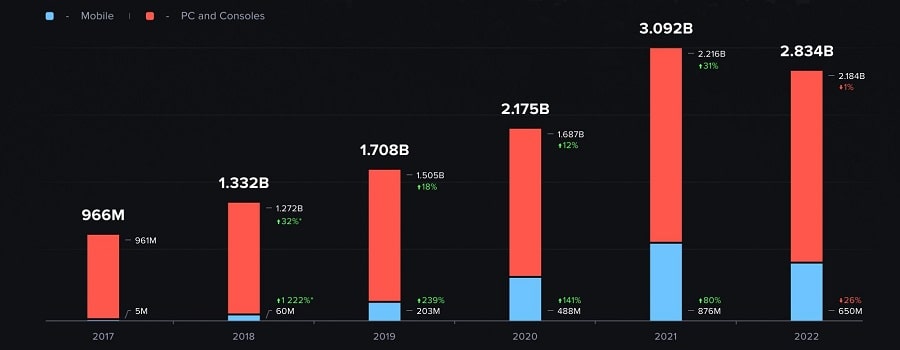
One common misconception is that esports, as a relatively young industry, does not generate impressive financial results. This could not be further from the truth. In recent years, the esports sector has recorded substantial growth in viewership, revenue and global market reach.
Major tournaments now boast prize pools in the tens of millions, and the global eSports market revenue is growing annually. Additionally, the fan base is expanding rapidly, with viewership numbers rivaling, and in some cases surpassing, traditional sports.
E-sports is an Area of Extreme Risk
Many investors erroneously view eSports as a volatile and risky sector. While all investments inherently carry risk, eSports has shown a consistent growth trajectory over the past decade.
Diverse revenue streams, including advertising, ticket sales, merchandise, and licensing, have provided the industry with a solid financial footing. Moreover, the influx of major brands and traditional sports teams into the eSports scene underscores its viability and long-term potential.
Long Occupation Period
There’s a belief that returns on eSports investments take an incredibly long time to materialize. In reality, the dynamic nature of the industry, combined with its rapid growth, means that many investors see substantial returns in shorter time frames than traditional investments. The key is identifying the right opportunities and sectors within eSports that align with current market trends and demands.
Esports is Completely Dependent on Sponsors and Media Rights
Although sponsorship from major companies such as Intel and Mercedes-Benz is an important source of revenue, it is far from the only one supporting the esports industry. In addition to branded merchandise, ticket sales and educational programmes, organisations can generate income from digital items, season passes and other game-related products associated with teams or tournaments. In some leagues, game publishers share a portion of this revenue with participating teams, creating a more direct financial link between fan engagement and the organisations’ operations. This model can provide a steadier flow of income than one-off sponsorship agreements, particularly when sales continue throughout an entire competitive season. A range of complementary revenue streams also makes it easier to adapt when audience habits, partner budgets or the terms of media rights agreements change. Diversification does not eliminate financial risk, but it reduces dependence on a single stakeholder and gives teams, leagues and tournament organisers better conditions for long-term planning.
Better to Invest in Gambling than eSports
Drawing parallels between eSports and gambling is a common misconception. While both sectors might offer investment opportunities, they cater to different markets and demographics. Moreover, eSports has a broader revenue model, whereas gambling is primarily dependent on bet placements.
eSports investments span across team ownership, event organization, technology development, and content creation, offering a multifaceted approach to potential returns. Thus, comparing the two is like comparing apples to oranges, with each having its unique merits.
Conclusion
Investing in esports, as in any other industry, requires a careful analysis of business models, costs, rights and long-term revenue opportunities. Decisions made without sufficient knowledge are more likely to be based on assumptions rather than a realistic assessment of risks and potential. By dispelling common myths and misconceptions, investors can approach the sector with greater clarity and a better understanding of its structure. As the esports industry continues to evolve, those who examine the facts and look beyond oversimplified claims will be better placed to identify sustainable opportunities.