
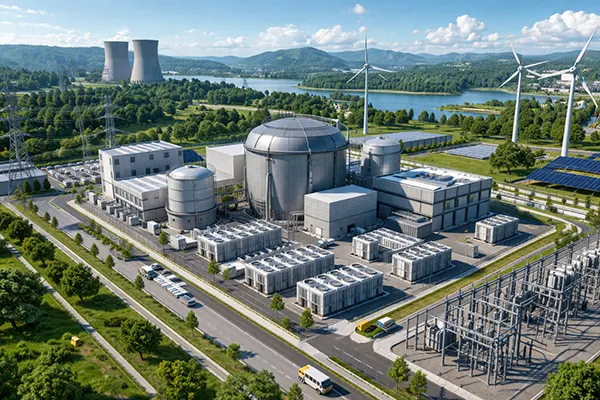
Investing in Small Modular Reactors (SMRs): Opportunities, Risks and Regulatory Constraints in Europe
Small modular reactors (SMRs) have moved from theoretical discussion to practical consideration across Europe, particularly in the context of energy security, decarbonisation targets and industrial electrification. Unlike conventional nuclear power plants, SMRs are designed to be manufactured in factories and assembled on site, which changes both cost structures and investment dynamics. For investors, this sector presents a rare combination of infrastructure-scale stability and early-stage technological uncertainty, making it essential to assess not only financial returns but also regulatory frameworks and geopolitical factors shaping the European energy landscape in 2026.
Market potential and investment drivers for SMRs in Europe
The primary investment case for SMRs lies in their ability to provide low-carbon baseload power while complementing intermittent renewable sources such as wind and solar. European governments increasingly recognise that achieving net-zero targets without nuclear support is technically challenging. As a result, countries including the United Kingdom, France, Poland and Romania have incorporated SMRs into their long-term energy strategies, creating a pipeline of projects that could attract both public and private capital.
Another key driver is industrial decarbonisation. Heavy industries such as steel, chemicals and hydrogen production require continuous high-temperature energy, which SMRs can supply more reliably than renewables alone. This opens a parallel investment avenue beyond electricity markets, where SMRs function as integrated energy solutions for industrial clusters. For investors, this diversification reduces dependency on wholesale electricity price volatility.
Cost predictability is also a factor. While large nuclear projects in Europe have historically suffered from delays and budget overruns, SMRs aim to reduce these risks through standardised designs and modular construction. Although full economic validation is still pending, early-stage financial models suggest that capital expenditure per unit could stabilise over time, improving long-term return visibility.
Strategic positioning within the European energy transition
SMRs occupy a specific niche between large-scale nuclear and decentralised renewable systems. Their relatively smaller capacity allows deployment in regions where traditional nuclear plants would be impractical, including remote industrial zones or countries with limited grid infrastructure. This flexibility enhances their strategic value in national energy planning.
From a policy perspective, the inclusion of nuclear energy—under certain conditions—in the EU taxonomy for sustainable activities has strengthened investor confidence. Although not universally accepted across all member states, this classification enables access to green financing instruments, including sustainable bonds and climate-focused investment funds.
Additionally, SMRs support grid stability. As Europe continues to expand renewable capacity, balancing supply fluctuations becomes increasingly complex. SMRs can operate as steady baseload units or adjust output to support grid demand, making them attractive assets within integrated energy portfolios.
Key risks associated with SMR investments
Despite their potential, SMRs remain at a relatively early stage of commercial deployment. As of 2026, only a limited number of projects worldwide have reached advanced construction phases, and most European initiatives are still in planning or licensing stages. This introduces technological risk, particularly regarding performance, scalability and cost assumptions that have yet to be fully validated in real-world conditions.
Financial risk is equally significant. Initial projects often require substantial public support, including subsidies, guarantees or direct state participation. Without these mechanisms, private investors may face uncertain returns due to long development timelines and delayed revenue generation. Furthermore, interest rate fluctuations can significantly affect the overall cost of capital for nuclear projects.
Public perception remains another critical factor. While attitudes towards nuclear energy have softened in some countries due to energy security concerns, opposition persists in others, particularly in Germany and Austria. This divergence creates an uneven investment environment across Europe, where political shifts can directly influence project viability.
Technology maturity and supply chain constraints
Many SMR designs are still undergoing certification and testing. Different reactor types—such as light water SMRs, molten salt reactors and high-temperature gas-cooled reactors—are competing for market adoption, which creates uncertainty around standardisation. Investors must evaluate which technologies are most likely to achieve regulatory approval and commercial scalability.
Supply chain readiness is another concern. The success of SMRs depends heavily on the ability to manufacture components at scale in controlled environments. However, Europe currently lacks a fully developed industrial ecosystem for mass SMR production, which could delay timelines and increase costs during the initial deployment phase.
Workforce limitations also play a role. Nuclear engineering expertise has declined in some European countries over recent decades, and rebuilding this capacity requires time and targeted investment. Without sufficient skilled labour, project execution risks may increase, affecting both schedules and budgets.
Regulatory frameworks and investment barriers
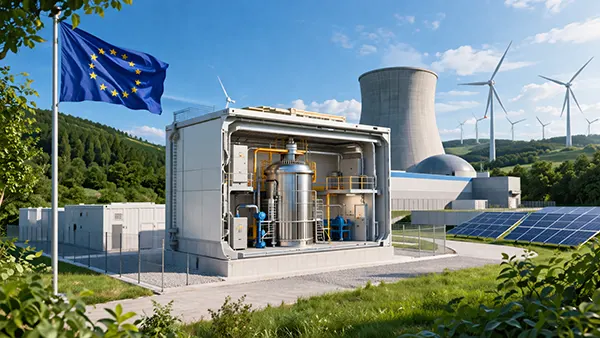
The regulatory landscape for SMRs in Europe is complex and fragmented. Each country maintains its own nuclear licensing authority, with distinct approval processes, safety requirements and timelines. This lack of harmonisation creates additional challenges for developers and investors seeking to scale projects across multiple jurisdictions.
Licensing timelines remain one of the most significant barriers. Even with simplified designs, SMR projects must undergo extensive safety assessments, environmental reviews and public consultations. These processes can take several years, delaying project implementation and increasing upfront investment risk.
At the EU level, efforts are underway to streamline regulatory cooperation through initiatives such as the European Industrial Alliance on SMRs. However, progress remains gradual, and full standardisation is unlikely in the near term. Investors must therefore navigate a multi-layered regulatory environment that combines national and European-level requirements.
Policy alignment and financing mechanisms
Government support plays a decisive role in the viability of SMR projects. Mechanisms such as contracts for difference (CfDs), regulated asset base (RAB) models and state-backed loans are increasingly being considered to reduce financial uncertainty. These instruments can improve bankability but often require long-term policy stability.
Cross-border collaboration is emerging as a potential solution to regulatory fragmentation. Joint projects between countries—such as those in Central and Eastern Europe—may benefit from shared infrastructure, financing and expertise. This approach could accelerate deployment while distributing risks among multiple stakeholders.
However, policy inconsistency remains a concern. Changes in government priorities, energy strategies or environmental policies can significantly impact investment conditions. For long-term infrastructure assets like SMRs, regulatory predictability is as important as technological feasibility, making political risk assessment a central component of any investment decision.